Creating Family Traditions That Fit Modern Life
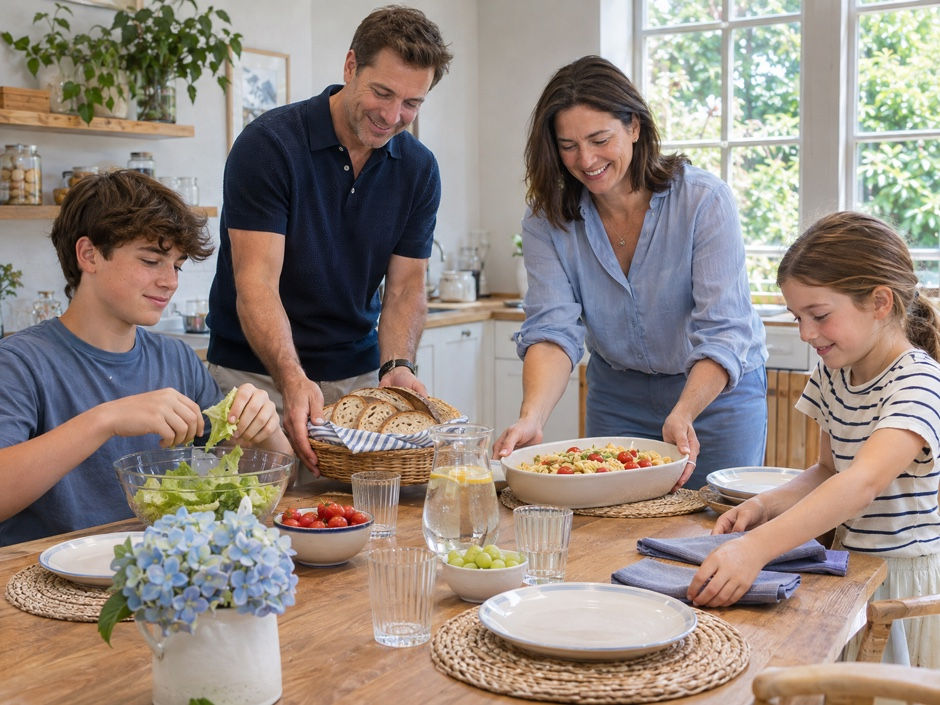
A family tradition can be as simple as making the same breakfast on a birthday or choosing a song for the journey home. It does not need matching clothes, a reservation or an audience.
The harder question is whether it fits the family you have now. Work shifts change. Children develop different interests. Relatives live far apart. A celebration that once felt effortless may now require more preparation than anyone wants to admit.
You can keep what matters while changing how you do it. This guide offers ways to choose shared meals, games, projects and small moments that people actually want to repeat. A year-end planning worksheet will help you turn those ideas into a manageable next occasion.
Find the part worth keeping
Before adding something new, think about an occasion you already enjoy. What makes it worthwhile?
Perhaps it is hearing an older relative tell a story while everyone prepares food. Perhaps it is the ridiculous trophy awarded after a card game. Perhaps it is having an hour when nobody needs to rush away.
Separate that experience from the arrangements around it. If the pleasure is being together over a familiar dish, you might keep the dish and simplify the rest of the meal. If everyone loves choosing music, the playlist can survive a change of venue.
Try finishing this sentence together: We would like more occasions when we can ______.
Answers might include laugh, make something, remember someone, share our culture or enjoy an unhurried conversation. Choose a meaning people recognize, rather than a phrase that sounds impressive in a family group chat.
Also ask what each person would happily stop doing. You may discover that the elaborate decorations are nobody's favourite part, including the person responsible for putting them up.

Let people help shape the occasion
A tradition is easier to propose when there is room to influence it. Offer a starting idea, then ask what would make it enjoyable or difficult.
For example: “I'd like us to have a games afternoon sometime this month. What would you want to play, and how long would feel right?”
The American Academy of Pediatrics' guidance on family rituals recommends making time to listen and allowing family members to participate in discussions. It also emphasizes respecting children's privacy, including conversations they do not want to have in front of siblings. Read the AAP's family rituals guidance.
Apply those ideas without turning the planning conversation into a formal meeting. Ask for suggestions in whatever form suits each person: a spoken answer, a drawing, a message or a choice between two activities.
With younger children, offer a manageable role, such as selecting a song or choosing between two stories. Older children might invent a game round or help decide the menu. Teenagers may prefer a say in the timing and who attends. These are options to adapt to the individual, not rules about what someone should enjoy at a certain age.
Leave room to pass on a question or sit out part of an activity. Shared time should not require a public account of everything happening in someone's life.
Make a shared meal possible on an ordinary budget
Start with the food people enjoy and the time you can realistically share. A weekday breakfast, a packed picnic or a simple snack can work as the recurring occasion. Dinner does not have to carry the entire responsibility for family togetherness.
Choose one recognizable feature: the same favourite dish, a rotating menu choice or a question anyone can answer. Keep the remaining arrangements flexible.
A hypothetical family might decide that each person occasionally chooses a low-cost meal, with someone else helping to prepare it. If cooking together is impractical, they could take turns choosing music while the food is served. Participation need not mean everyone crowding into the kitchen.
Check dietary and access needs before buying ingredients. Decide which tasks are suitable for each participant and where adult supervision is needed. Buying prepared food or asking guests to bring something is an option, not a failure of hospitality.
Include the clearing up in the plan. A lovely meal loses some of its appeal when the same person is left with every pan. Share work according to capacity, and reduce the menu if there is more work than people can reasonably take on.

Choose games that leave room for everyone
A games tradition needs a format people can actually join. Consider reading demands, noise, movement, concentration and how long a round takes. Choose materials and rules around the people present.
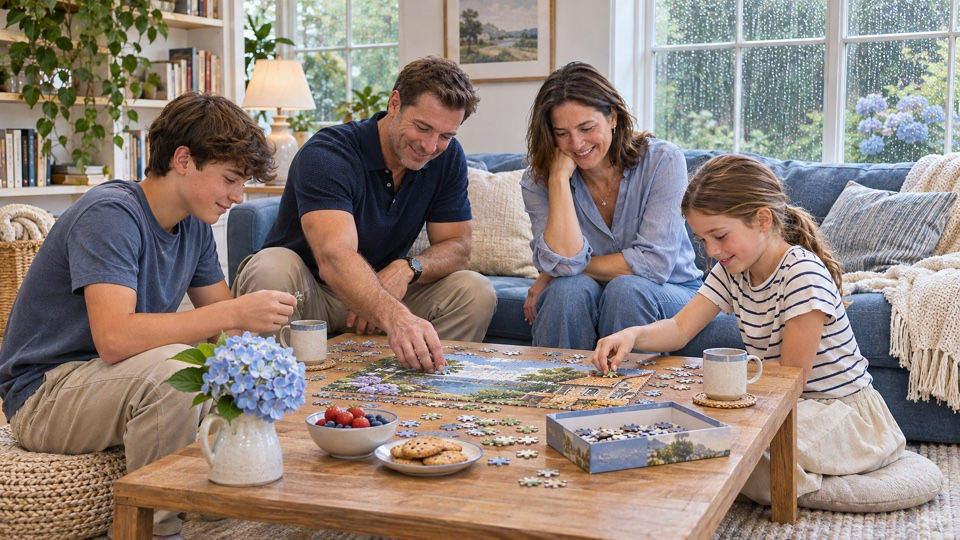
Possible starting points include a familiar card game, a collaborative drawing, a music guessing round or a puzzle that people can work on at different times. A spoken game might need written prompts; a timed round might work better without the timer.
For mixed ages, offer different contributions to the same activity. One person can describe a picture, another can draw and another can suggest the next theme. Nobody needs to be assigned the same role forever.
Decide beforehand whether competition adds enjoyment. Some groups love a scoreboard; others would rather make something together. If a game repeatedly ends in frustration, change the game or the rules. There is no family heritage committee that must approve the decision.
Keep an easy stopping point. One short round can be a complete occasion. People should be able to look forward to the next one without needing to recover from the last.
Make something that can accumulate over time
A shared project offers a different kind of tradition: each occasion contributes a small piece to something you can revisit.
You might keep a handwritten recipe folder, add one drawing to a seasonal scrapbook or make an annual playlist with a note about each selection. Use materials already available, and choose a project that can live comfortably in your space.
For a recipe folder, the contribution could be a dish name, a sketch, a photograph or a few instructions. Someone who dislikes writing can explain the recipe while another person takes notes. A contribution does not need to be polished to belong.
Stories are another possibility. Smithsonian Education's family folklore guide suggests that familiar activities can provide a natural setting for conversation, and that objects such as photographs or letters can prompt memories. See the Smithsonian's interviewing guidance.
You could ask, “How did this dish become part of our celebrations?” or “What do you remember about the day in this photograph?” Follow the answer rather than working through a list.
Ask before recording, photographing or sharing someone's contribution. Agree whether it stays in the household, goes to a small family group or can be shared more widely. Being present at an occasion should not automatically mean appearing online.

Adapt the tradition to more than one household
Family time does not always happen around one table. A tradition can include relatives living elsewhere, children moving between households or people whose work makes holiday attendance difficult.
Choose what needs to be shared and what can happen separately. Different households might prepare the same dish during a particular week and exchange a note afterwards. A relative could record a story for someone to hear at a convenient time. Nobody needs to stay awake for a video call simply to prove commitment.
For children spending time in different homes, avoid asking them to compare celebrations or carry messages between adults. Keep arrangements between the adults responsible, and allow different homes to develop different customs. The occasions do not have to compete.
When cultures or established traditions meet, ask what each practice means before combining or changing it. Some people may welcome a shared celebration; others may want distinct occasions. Do not assume every custom is interchangeable.
Where contact is strained or unwelcome, an invitation should not become pressure to reconnect. Build the occasion around relationships in which participation is comfortable and appropriate.
Plan for the version of the day you actually get
An outdoor outing needs an alternative for bad weather. A busy week needs a shorter option. A family member may need a quiet space, a seated activity, help with transport or a different way to communicate.
Ask about these arrangements before the occasion. Make it possible to take a break without turning the break into an issue. If a venue or activity cannot accommodate someone, reconsider the plan rather than treating their absence as inevitable.
Keep a smaller version of the tradition available. A long cooking afternoon might become sharing a snack and telling one story. A large gathering might become a brief visit. The point is to retain the part people value without insisting on the full production.
Also make cancellation ordinary. Illness, work or a difficult day can interrupt a plan. Decide whether to choose another date or simply wait until the next opportunity. An unfinished streak is not a family emergency.
Give seasonal traditions permission to change
The end of a year is a useful invitation to look back, if that fits your family's calendar. You can also use a birthday, a cultural celebration or the beginning of a school break. There is no compulsory date for taking stock.
Ask each person for one occasion they enjoyed and one thing they would change. You could look through a few photographs, choose a song associated with the year or remember something amusing that happened together.
Avoid requiring everyone to describe the year positively. A loss, separation or difficult period may change what a familiar celebration feels like. Offer choices about remembering someone, simplifying the occasion or leaving a particular activity out. People can want different things, and nobody has to deliver a cheerful speech.
Retiring a tradition does not erase its history. Keep a recipe, a photograph or a story if you want to, while making room for something that suits life now.
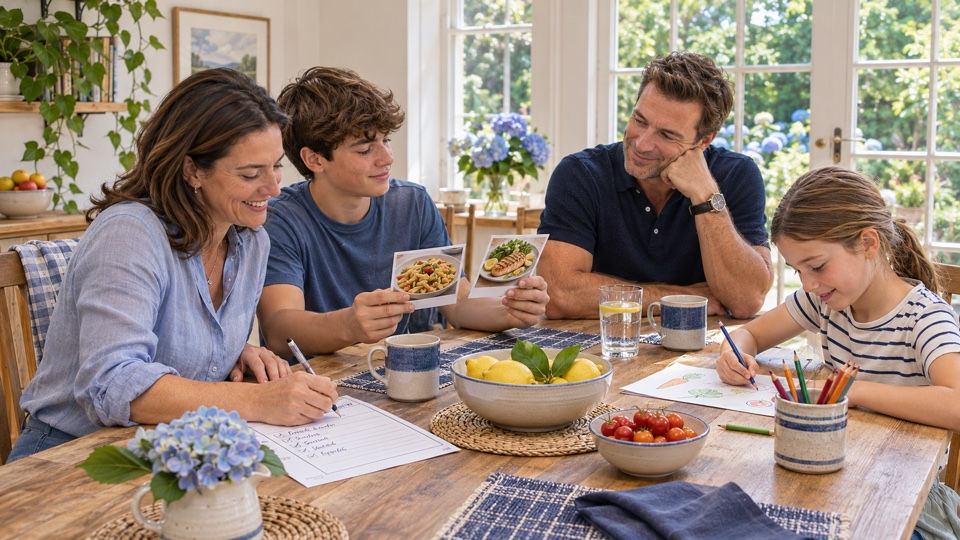
Your year-end family-traditions planning worksheet
Use this worksheet for one tradition you want to keep, adapt or try. Write down only the details that help. You can complete it through conversation, drawings or brief notes.
1. The part we value
An occasion we enjoyed this year:
What made it worth repeating:
What we would change or leave out:
2. Our next occasion
The tradition we want to keep, adapt or try:
What we hope to enjoy together:
Who would like to take part, and how we will check:
A possible date or flexible time window:
The length of time that would suit us:
3. What will make it workable
Our spending limit, including food and travel:
Materials or equipment we already have:
Food, access, communication or quiet-space arrangements:
Who will plan, prepare, participate and clear up:
A suitable way for different ages or households to contribute:
4. Our smaller version
What we can simplify if time, energy or circumstances change:
What we will do if someone cannot attend:
Whether any photographs or recordings are wanted, and who may see them:
5. After the occasion
What did people enjoy?
Was the effort and cost manageable for those involved?
What should change before we do it again?
Do we want another occasion, a different idea or a pause?
For example, a hypothetical household might choose a year-end recipe afternoon. They agree to prepare one familiar dish, stay within their usual food budget and invite a relative to send a short story about it. One person gathers ingredients, another writes down the recipe and others take suitable preparation or clearing-up tasks.
Their smaller version is sharing the dish over a short meal, with the story read aloud. They agree that photographs stay private. Afterwards, they might keep the recipe idea but move the occasion to a less crowded month.
That is enough of a plan. It gives the occasion a shape while leaving room for the people taking part.
Choose something you would welcome again
You do not need to design an entire year of family memories. Choose one occasion, find the part people care about and make the arrangements light enough to repeat.
If it works, enjoy it again. If it becomes burdensome, change it. The most useful question is whether the people involved want to make room for it in their lives.
About the author: Jay Scott Kirk Lee is a Canadian entrepreneur with a background in sales, marketing, and business development. Explore more of his writing on the articles page.
Comments